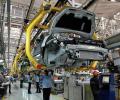
Automobile manufacturers are likely to report strong numbers for the September quarter of Financial Year 2023-24 (Q2 FY24), riding on growth across segments and offset by a marginal drop in overall two-wheeler (2W) volumes. Higher average selling price (ASP) year-on-year (YoY), which was necessitated by price hikes taken by original equipment manufacturers (OEMs), and an improved product mix will also aid revenues and margins. Moreover, commodity prices are down on a YoY basis, leading to higher margins in earnings before interest, taxes, depreciation and amortisation (Ebitda).
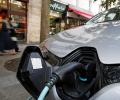
Automobile manufacturers, new and old, as well as ancillary suppliers are set to spend a combined Rs 70,630 crore over the next five years on either entering the electric vehicle segment or stepping up their presence in it. Data culled from announcements made by firms shows India, the world's fifth largest automobile market, is poised to receive one of the biggest capex pushes ever to fuel the transition from internal combustion engines to electric motors and batteries as part of a green drive. The EV push, egged on by the government's emphasis on electric mobility to meet its net zero targets, is expected to yield at least 25 electric vehicles - new ones as well as electrified versions of existing vehicles running on internal combustion engines.

Besides electric vehicles, some start-ups present are working in the area of bike customisation, motorsports, auto gaming arena, autonomous vehicle and so on
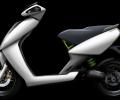
Large manufacturers are investing in small companies to get a peek into their R&D. Alnoor Peermohamed and Anita Babu report.

Retail sales of passenger vehicles grew last month but the sales of two-wheeler and commercial vehicles remained low compared to the pre-COVID month of May 2019, according to automobile dealers' body FADA. On Monday, FADA said that overall auto retails stood at 16,46,773 units in May, down from 18,22,900 units in May 2019. "May 2022 retails when compared to May 2019 reveal that sales are still not on a growth trajectory as overall retails were down by 10 per cent.

Speaking on the cancellation of the deal, Joe Bowman, chief executive officer of Ultra Motors, said, "The opportunity cost of selling electric vehicles in India does not fit strategically under this joint agreement. We intend to create shareholder value and positively impact those markets where we operate. We have come to believe India is one of the largest markets in the world. So we are looking forward to develop it independently."

Traversing from being just vehicle manufacturers to mobility solutions providers amid a raging debate over which eco-friendly technology must be incentivised, the Indian automobile industry is driving in the new year under the shadow of a slowdown in sales with the post-pandemic pent-up demand in distant memory. The shift in the auto industry -- where advanced technologies like autonomous driving, vehicle intelligence, connected features and electrification are quickly gaining traction -- will be reflected in the upcoming Bharat Mobility Global Expo in which India's flagship Auto Expo has been clubbed to be held from January 17-22, 2025 in Delhi-NCR.

In light of the recent incidents involving scooters from prominent electric mobility brands bursting into flames, the subject of electric vehicle (EV) safety has come under the spotlight. As many as 20 electric scooters of Nashik-based Jitendra EV Tech caught fire after being loaded on a transport container. While no one has been reported injured, the company said it is conducting an investigation to find the 'root cause' of the fire.

Ford, which had announced to quit the Indian market last year, said it was exploring the possibility of using one of its plants in India to produce electric cars for exports.

There are four things that stand out in China's strategy for electric vehicles, says Vandana Gombar.

The first luxury car will be launched in the first quarter of 2025 and the company is planning to open 12 'MG Select' showrooms in the next six months.

...But sales of domestic passenger vehicles dropped 2% to 3% year-on-year in August owing to low demand.

With its new premium Primus and Ampere NXG, it is targeting buyers seeking a faster and more stylish ride
Society of Manufacturers of Electric Vehicle (SMEV) on Thursday said sales of EVs in India fell 20 per cent in the financial year 2020-21 to 236,802 units. In 2019-20 sales of electric vehicles (EVs), including electric two-wheelers (E2W), electric three-wheelers (E3W) and electric four-wheelers (E4W), stood at 295,683 units. For FY21, the E2W segment sales declined by 6 per cent to 143,837 units, as compared to 152,000 units in FY20, SMEV said in a statement, adding that the FY21 E2W sales included 40,836 high-speed and 103,000 low-speed E2W. The E3W segment registered sales of 88,378 units as against 140,683 units sold in FY20.
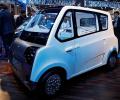
The EV industry is at an inflection point and batteries will play a critical role ahead -- batteries and related components typically constitute 35-45 per cent of an EV's costs.
Arvind, Electrotherm, Shah Alloys have surplus power to sell. Ahmedabad-based stainless steel manufacturer Shah Alloys, denim maker Arvind Ltd and electric two wheeler producer Electrotherm are currently producing surplus power from their CPPs and they are looking at selling it.
Japan's most famous electric auto maker, Terra Motors has recently launched an electric superbike Kiwami and has plans to a launch a scooter soon.
The Ahmedabad-based company plans to collaborate with local garage owners in installing battery charging stations at a radius of around three kms. Delhi, Mumbai, Chennai and Bangalore are some of the cities identified for setting up battery stations. The initiative is planned to be implemented during the first quarter of 2009.

Innovation ranging from exterior designs of vehicles to EV charger locks grabbed eyeballs at the expo

The Hero Electric Cruz is a good electric vehicle, but has a few more boxes to be ticked for it to be accepted by the masses.
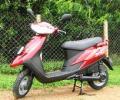
The company is currently carrying out test runs of about 50 electric scooters across various towns in the country.

'The favourable rupee-dollar exchange rate, there are opportunities we can tap.'

Power was also disrupted in many areas as the dust storm swept the national capital late Friday night.
Ten things you must know about the latest innovation from Mahindra

Maruti Suzuki, Hyundai and Tata Motors reported a decline in wholesales in September as the companies curtailed dispatches to dealers to reduce inventory build-up amid a decline in demand. Maruti Suzuki India reported a 4 per cent dip in total domestic passenger vehicle wholesales last month to 144,962 units compared to 150,812 units in the year-ago month. The auto major said sales of mini segment cars, comprising Alto and S-Presso, grew marginally to 10,363 units against 10,351 units in September 2023.
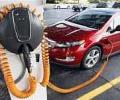
To boost the sagging sales of electric vehicles, the government on Wednesday approved the extension of the Ministry of New and Renewable Energy (MNRE)'s subsidy scheme to incentivise sales of electric cars and two-wheelers in the country.
The $3-billion conglomerate Hero Group is making a foray into electric three-wheeler segment, expanding its core portfolio of bicycles and two-wheelers.

According to research by IHS Markit, for an ecosystem still grappling with infrastructure issues -- the high cost of EVs and a greater OEM (original equipment manufacturer) focus on electrifying two-wheelers and commercial vehicles first -- the share of such vehicles is expected to be 4 per cent by 2030, reports Pavan Lall.
With Budget concessions in place to propel the Indian automobile industry on a green drive, manufacturers are planning electric and hybrid variants of cars and two-wheelers.
'We are not asking for incentives, but at least taxation can be aligned such that the rupee tax on consumers remains the same.'

To ramp up domestic battery manufacturing capacity and reduce the dependence on imports, the government has initiated talks with a few lithium-rich countries to supply the mineral to Indian companies, industry sources informed Business Standard. The Ministry of External Affairs (MEA) held a meeting with the ambassadors of countries, including Argentina, Chile, and Bolivia, among others, to put forth its request.

'Invest only in stocks of those companies that deliver on earnings and there is earnings visibility too for the next few quarters.'

India's largest two-wheeler maker by volume - Hero MotoCorp (Hero) - posted a better-than-expected operating performance in the January-March (fourth quarter, or Q4) quarter of 2022-23 (FY23). Riding on higher average selling prices which were up 5 per cent year-on-year (YoY) and volume growth of 7 per cent, the company registered a 12 per cent growth in revenue to Rs 8,306 crore. The company sold 127,000 units in the quarter, largely driven by domestic sales which were up 11.6 per cent, while exports saw a sharp fall of 57 per cent over the year-ago quarter.

As a tech services company, Ola has never been in hardcore manufacturing. And unlike in ride hailing, which is a two-player market (Uber is the only other competitor), in two-wheelers it faces many entrenched players. But most of all, rivals say Ola's targets are out of sync with most, even ambitious, projections.

The establishment -- Vice-Global Tapas Bar -- against which the action was being taken, is located in Juhu suburb.

As the government plans no further extension of the scheme beyond FY24, the task is to achieve the unfinished target of subsidising 914,707 EVs.
Bangalore-based Reva Electric Car Company, two-wheeler maker Bajaj Auto and Tata Motors are finalising plans to launch electric vehicles in Europe and the US to take advantage of subsidies these countries are offering as part of their environmental agendas.

Passenger vehicle wholesales saw a marginal growth of 4 per cent in June on account of high base effect and muted demand due to severe heatwave conditions in several parts of the country. Overall passenger vehicle dispatches last month stood at 340,784 units, a growth of 3.67 per cent compared with 328,710 units in June 2023.
